AI headshot apps are cheap, fast, and getting better. Worth understanding what they're actually doing before you decide whether that trade-off works for you.
You upload a handful of selfies. The model doesn't photograph you — it never has a camera pointed at you at all. It interpolates: it studies the patterns in your uploaded photos and generates a new image that statistically resembles them, dressed in a suit, lit like a studio, styled like a headshot. It is guessing what you'd look like in a photo that was never taken.
That's why the results can look slightly off in ways that are hard to name — a jawline that's a little too symmetrical, skin that's a little too smooth, an expression borrowed from whichever training photo it leaned on hardest. It's also why two batches from the same person can look like two different people.
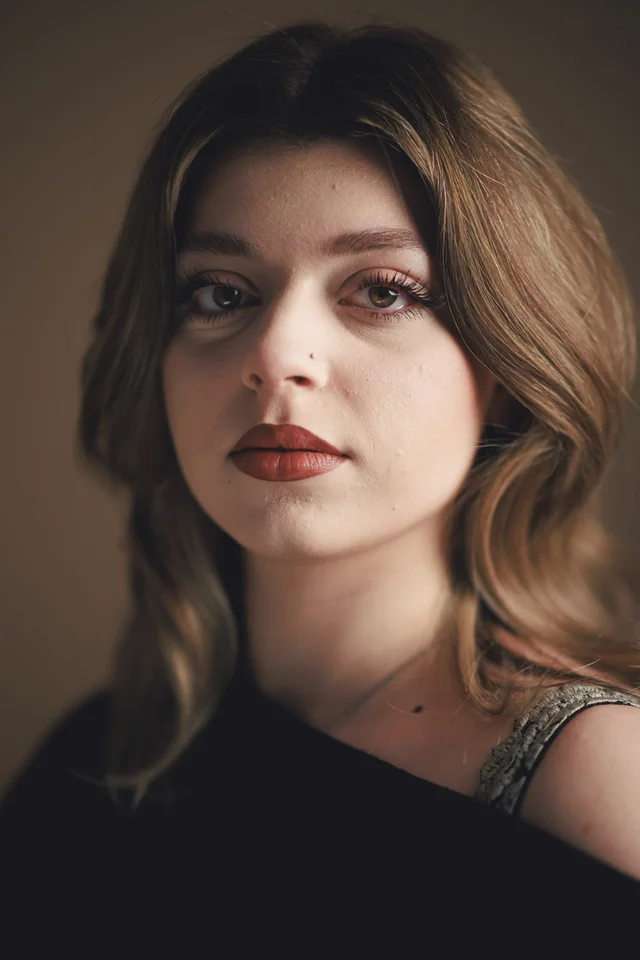
Cheap and fast is a real advantage for low-stakes use — a throwaway profile picture, an internal tool nobody outside your team will see. It stops being a good trade the moment someone on the other end needs to trust that the photo is really you: a casting director deciding whether to bring you in, an agent representing you to clients, a business partner sizing you up before a call, a recruiter cross-checking your face against your ID at interview stage.
In those situations, an AI-generated face is a liability, not a shortcut — it's the first thing that erodes trust if someone notices, and the safest assumption is that they will.